
For women living with lipedema, finding effective treatment has often meant years of misdiagnosis, dismissed symptoms, and insurance denials. One of the biggest obstacles has been the evidence gap. Insurers and regulators have long described liposuction for lipedema as promising but unproven.
That changed with the LIPLEG trial. Its full 12-month results were published in The Lancet in September 2026. They are the strongest evidence to date that lipedema reduction surgery can meaningfully reduce pain and improve quality of life at every stage of the disease.
Here is what the study found, how it was done, and what it could mean for you.
What Is the LIPLEG Study?
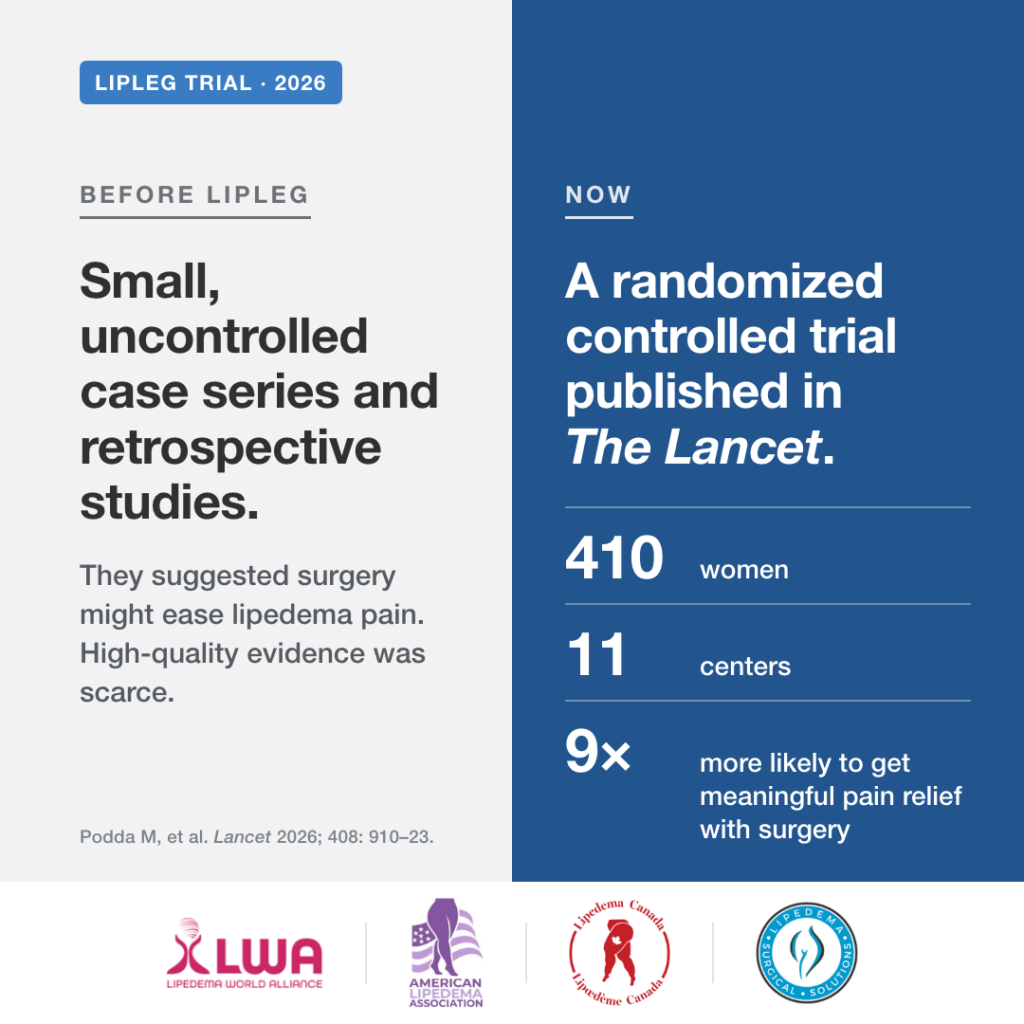
LIPLEG is the first multicenter randomized controlled trial comparing liposuction with conservative therapy for lipedema. It was conducted at 11 hospitals and specialty practices across Germany. It enrolled adult women with stage I, II, or III lipedema and moderate to severe leg pain, rated at least 4 on a 0 to 10 scale.
A randomized controlled trial is considered the gold standard in medical research. Earlier studies of lipedema surgery were mostly smaller case series without a comparison group, which left room for doubt. LIPLEG was designed to answer the question directly.
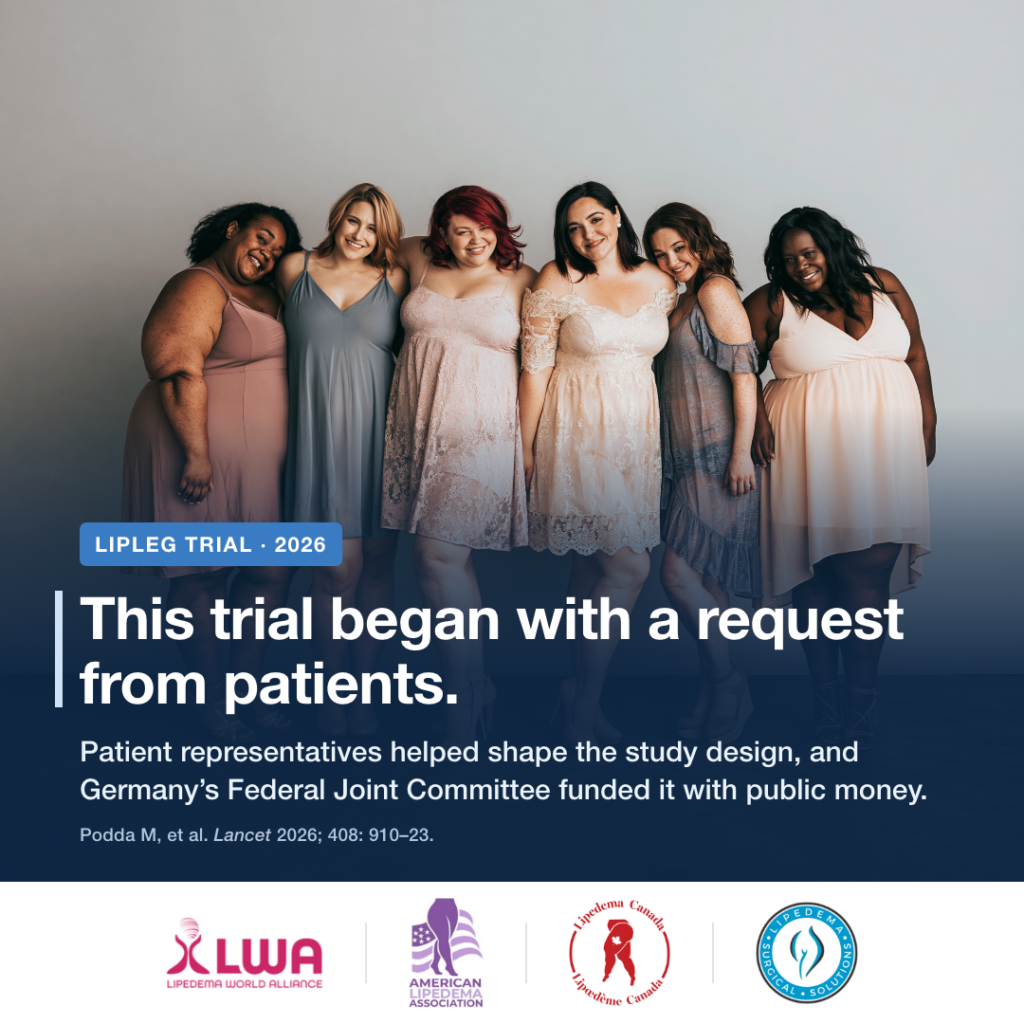
A Study Patients Asked For
LIPLEG began because patients requested it, and patient representatives helped shape its design. It was funded entirely by Germany’s Federal Joint Committee (G-BA), the body that decides what German statutory health insurance covers. There was no industry sponsor and no commercial interest in the outcome.
The response from women with lipedema was overwhelming. According to investigators presenting the results, roughly 35,000 women applied online within hours of the registration portal opening. Because interest far exceeded the available spots, participants were selected by lottery. Of 1,973 women screened, 453 were enrolled and 410 were ultimately randomized.
How the Study Was Designed
The design was built to make the comparison as fair as possible:
- Everyone started with conservative care. All participants first completed up to seven months of complex decongestive therapy, including compression, manual lymphatic drainage, physical activity, and skin care. This reduced swelling and gave both groups the same starting point.
- Random assignment. Women were then randomly assigned, two to one, to either liposuction or 12 more months of conservative therapy alone.
- Blinded assessments. The clinicians measuring results did not know which treatment each woman had received. To protect this, every participant, whether she had surgery or not, arrived at checkups with patches taped to her legs, and patients were asked not to reveal their treatment.
- Fair access for everyone. After the 12-month visit, women in the conservative group were offered liposuction.
The Results: Less Pain, Better Function, Better Quality of Life
Pain Relief, the Primary Goal
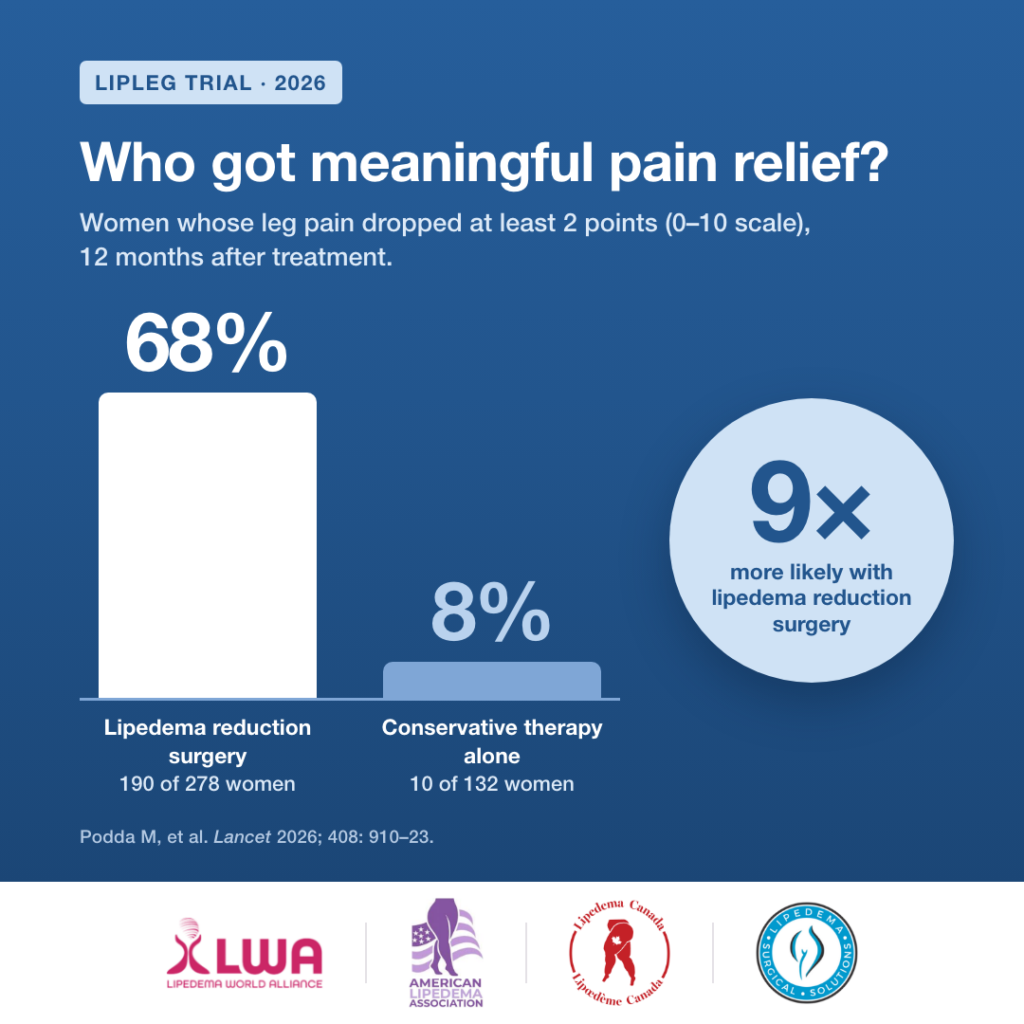
The main question was whether leg pain dropped by at least 2 points on a 0 to 10 scale, measured 12 months after treatment.
- 68.3% of women in the liposuction group reached that goal
- 7.6% of women in the conservative therapy group did
Put another way, the odds of meaningful pain relief were about 26 times higher with liposuction. The benefit held at every stage: 67.8% versus 9.5% in stage I, 72.6% versus 6.7% in stage II, and 64.5% versus 6.7% in stage III.
Average pain scores tell the same story. In the liposuction group, average leg pain fell from 6.2 to 2.6. In the conservative group, it stayed essentially the same, moving from 6.3 to 6.6. Women who missed their final assessment were counted as not improving, so if anything, these results understate the benefit.
Mobility and Daily Function
Lipedema pain and tissue heaviness can make walking, climbing stairs, and everyday tasks harder. On the Lower Extremity Functional Scale, a standard measure of leg function, 70% of liposuction patients improved meaningfully, compared with 10% of the conservative group. That is about 21 times higher odds of better function. Women with stage III lipedema saw the strongest gains, with 82.5% improving.
Easy Bruising
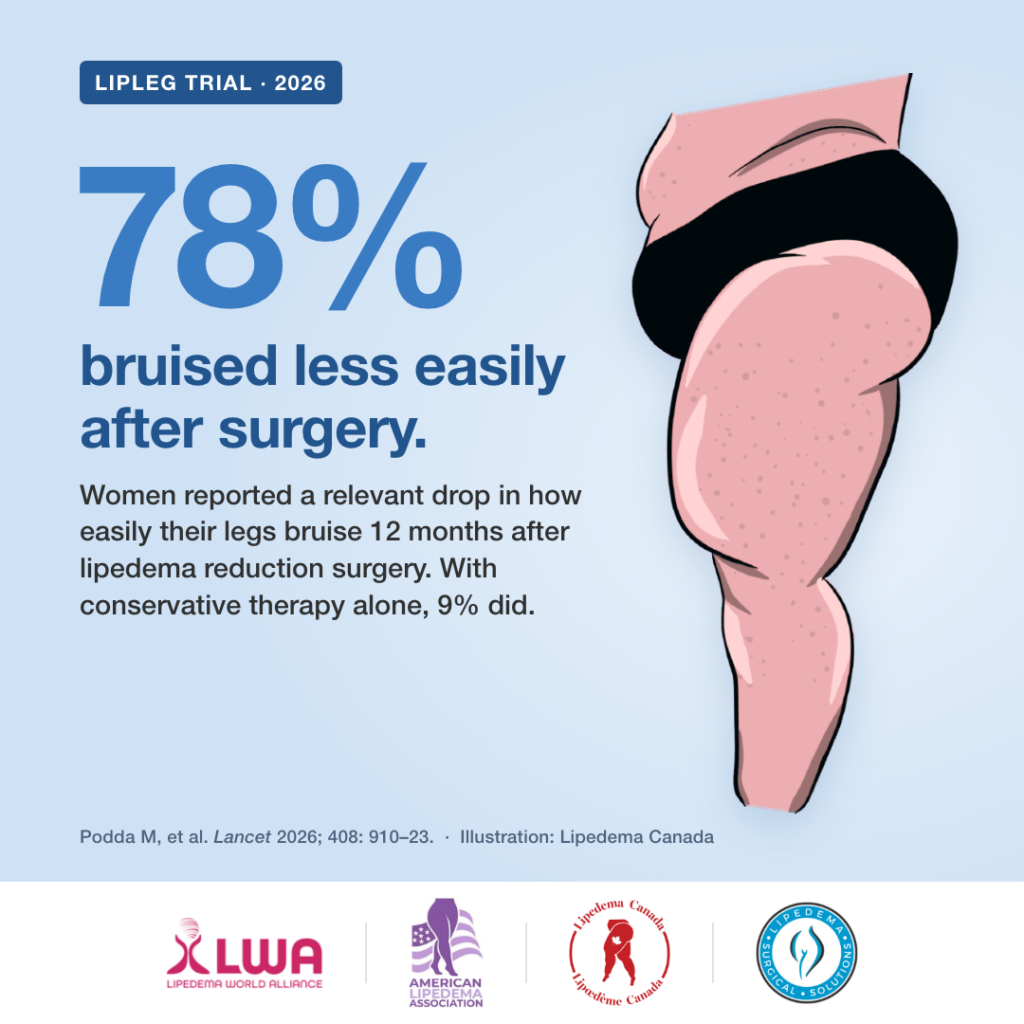
Easy bruising is one of the most frustrating everyday symptoms of lipedema. After liposuction, 78% of patients reported meaningful improvement in how easily they bruised, compared with 9% in the conservative group.
Mood and Quality of Life
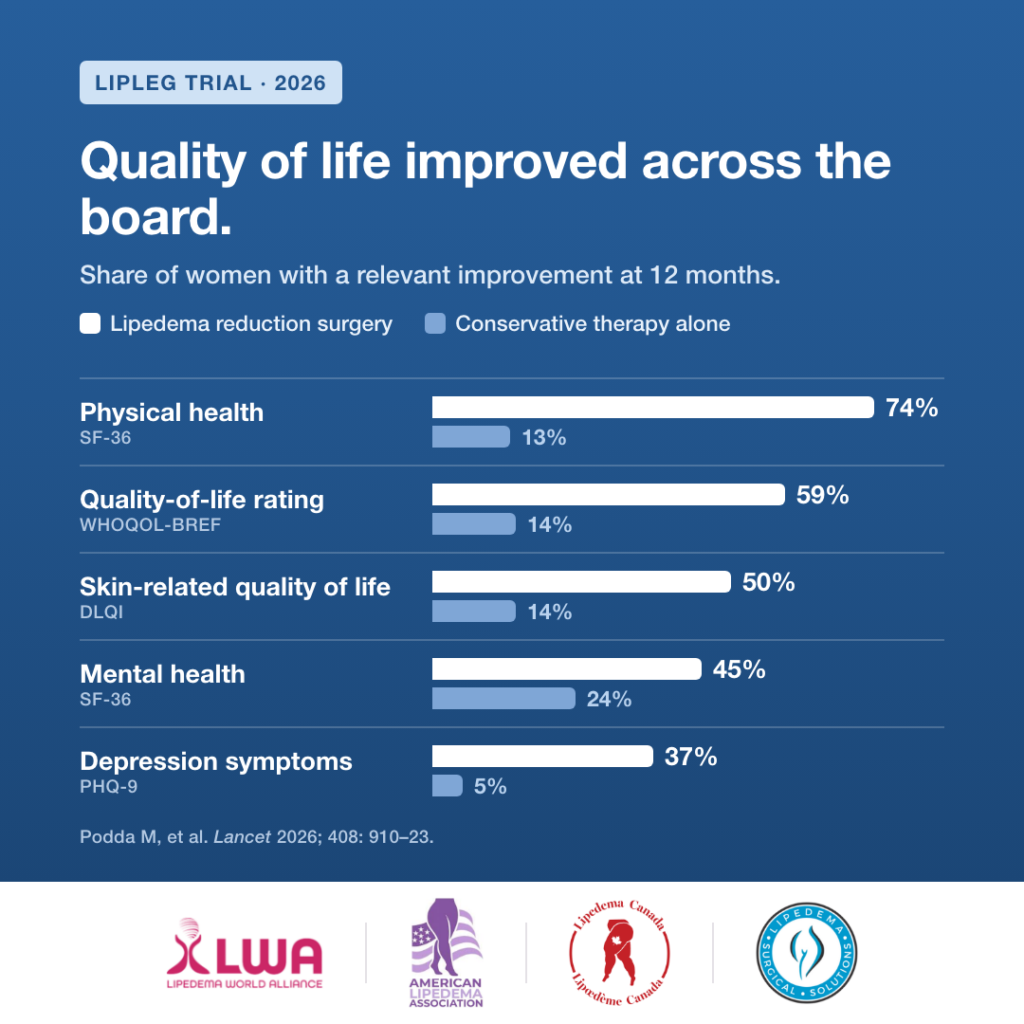
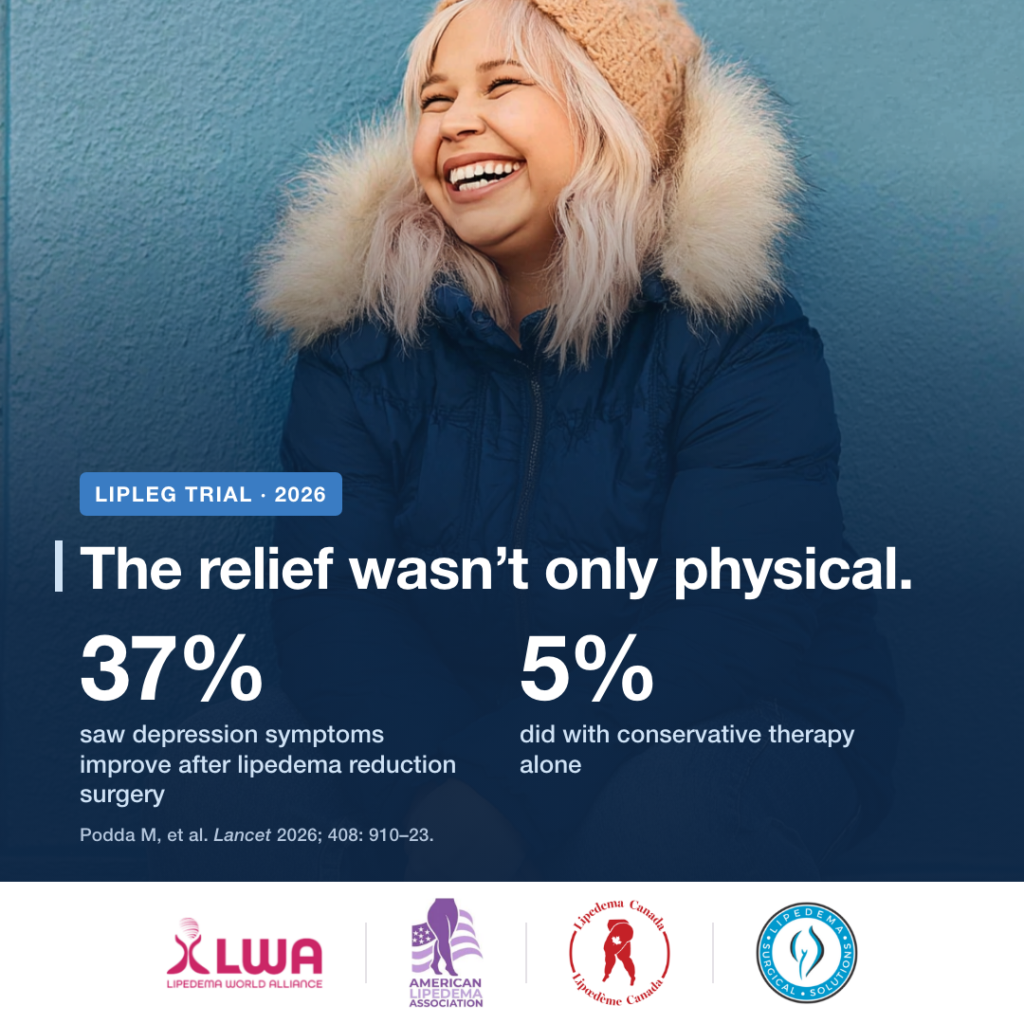
Living with chronic pain takes an emotional toll. Depression scores improved meaningfully for 36.7% of liposuction patients, compared with 5% of the conservative group.
Physical quality of life, measured with the widely used SF-36 survey, improved for 73.7% of surgical patients versus 13.4% of conservative patients. Skin-related quality of life improved for about half of surgical patients, compared with 14% in the conservative group.
Not every measure improved at every stage. For example, women with stage I lipedema did not show a significant change in the SF-36 mental health score, which researchers suggest may reflect the lower overall burden of early-stage disease.
Understanding the Safety Findings
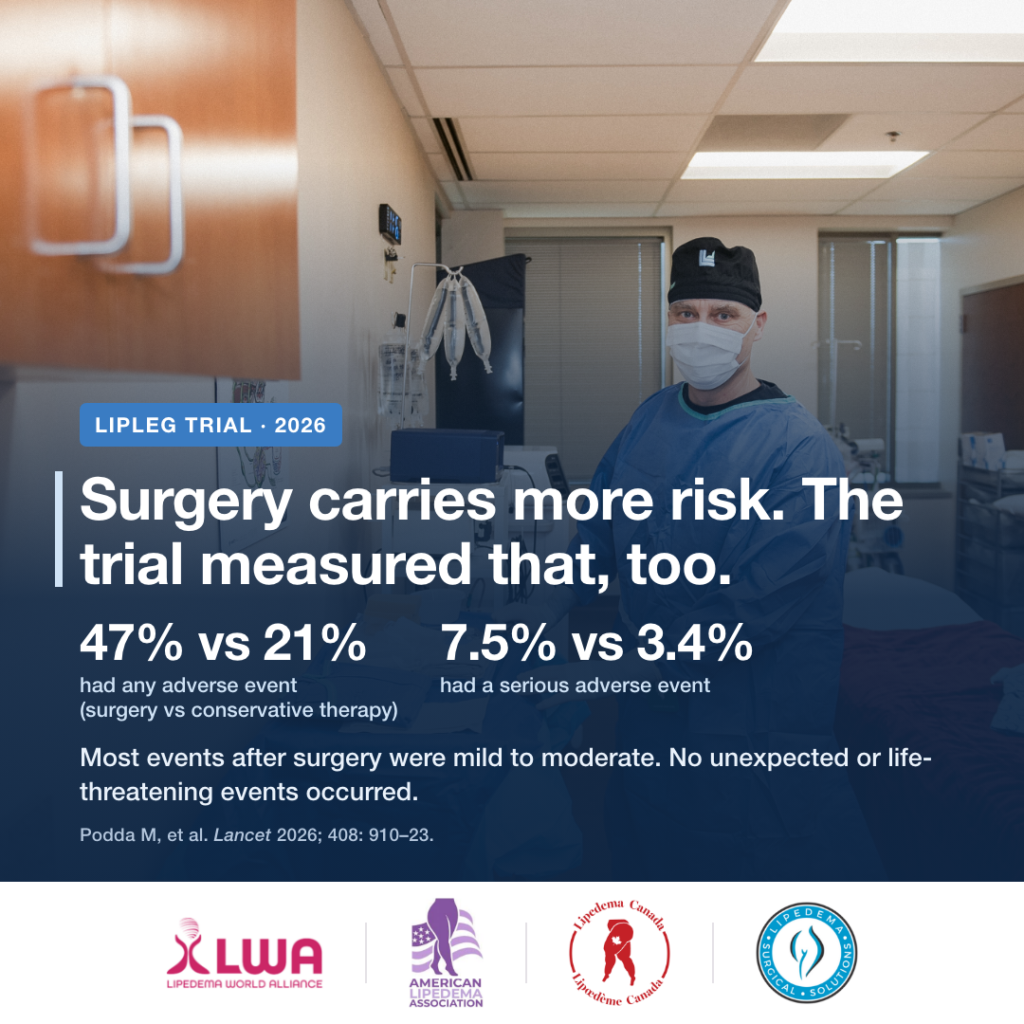
Liposuction is surgery, and the study was clear that surgery carries more risk than conservative care. As expected, more adverse events occurred in the liposuction group.
Why the Numbers May Look Higher Than Expected
LIPLEG recorded every health event participants reported during the study, whether or not it had anything to do with treatment. A sprained ligament, a bout of flu, or a new diagnosis all counted.
This happened in both groups. In the conservative group, one participant was diagnosed with multiple sclerosis and another had a heart attack. Neither was caused by compression or lymphatic drainage. In the liposuction group, COVID-19 infections alone accounted for 60 of the 194 events recorded after surgery.
With that context, here are the overall figures from the year after treatment began:
- 47% of liposuction patients reported at least one adverse event of any kind, compared with 21% of conservative patients
- 7.5% of liposuction patients had at least one serious event of any kind, compared with 3.4% of conservative patients
Complications Related to Surgery
Complications that are known to happen after liposuction were tracked separately. Serious complications of this kind occurred in 4.2% of surgical patients. The most common included:
- A temporary drop in hemoglobin (anemia) after surgery
- Skin infections such as erysipelas
- Seromas, which are fluid collections under the skin
- A small number of blood clots
According to the investigators, most of these events were mild to moderate and resolved on their own or with treatment. There were no deaths, and no unexpected or life-threatening events were observed. Only one surgical patient left the study because of a complication.
Every surgeon in the trial had performed at least 30 lipedema liposuctions in the previous two years. Experience matters, and Dr. Wright reviews each patient’s individual risk factors carefully before recommending surgery.
Conservative Care Still Matters
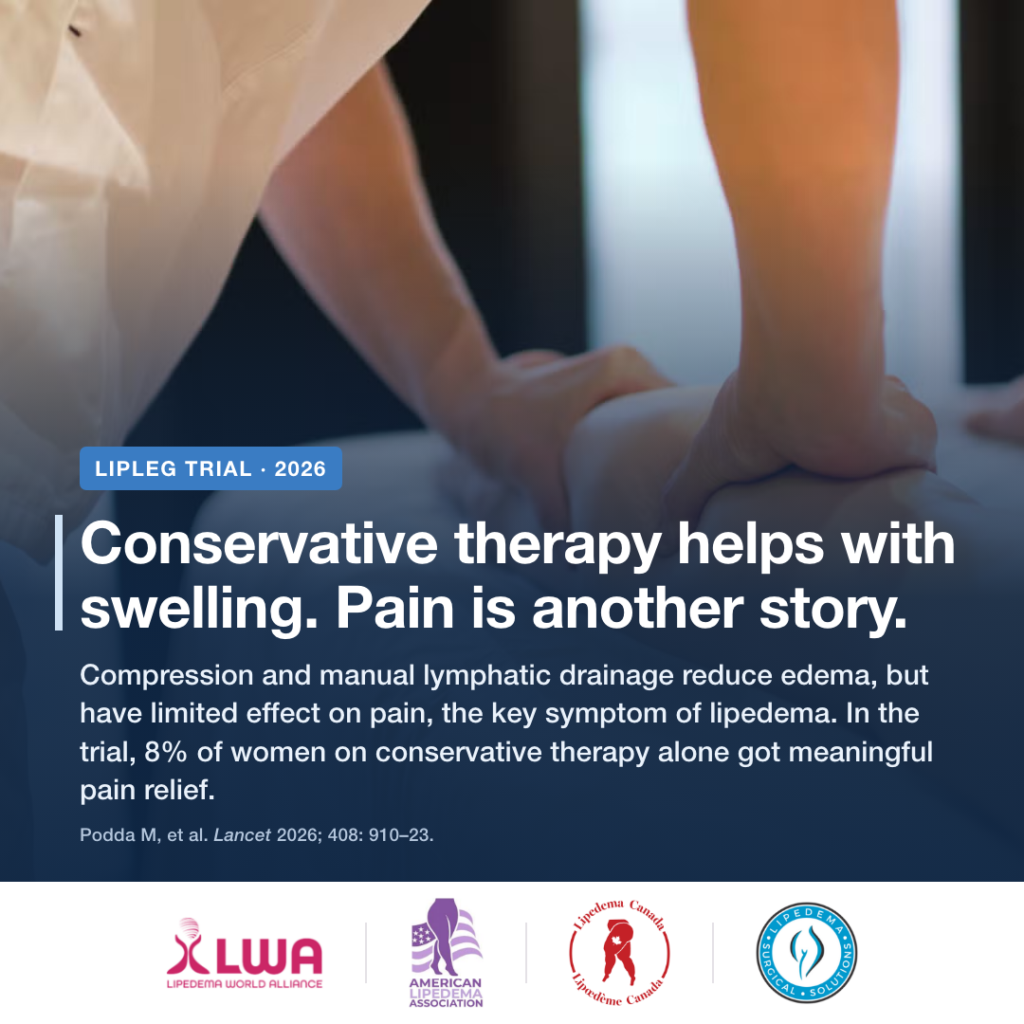
LIPLEG does not show that compression and lymphatic drainage are useless. In fact, 73% of women in the liposuction group used conservative therapy alongside surgery, and 69% were still using it 12 months after their final procedure.
The takeaway is that conservative therapy alone rarely brought meaningful pain relief, while surgery combined with good ongoing care often did. Liposuction is one part of a complete treatment plan, not a replacement for it. Our guides to compression garments for lipedema and CDT and MLD recovery explain how these fit together.
What the Study Doesn’t Tell Us Yet
Every study has limits, and LIPLEG’s investigators are upfront about theirs:
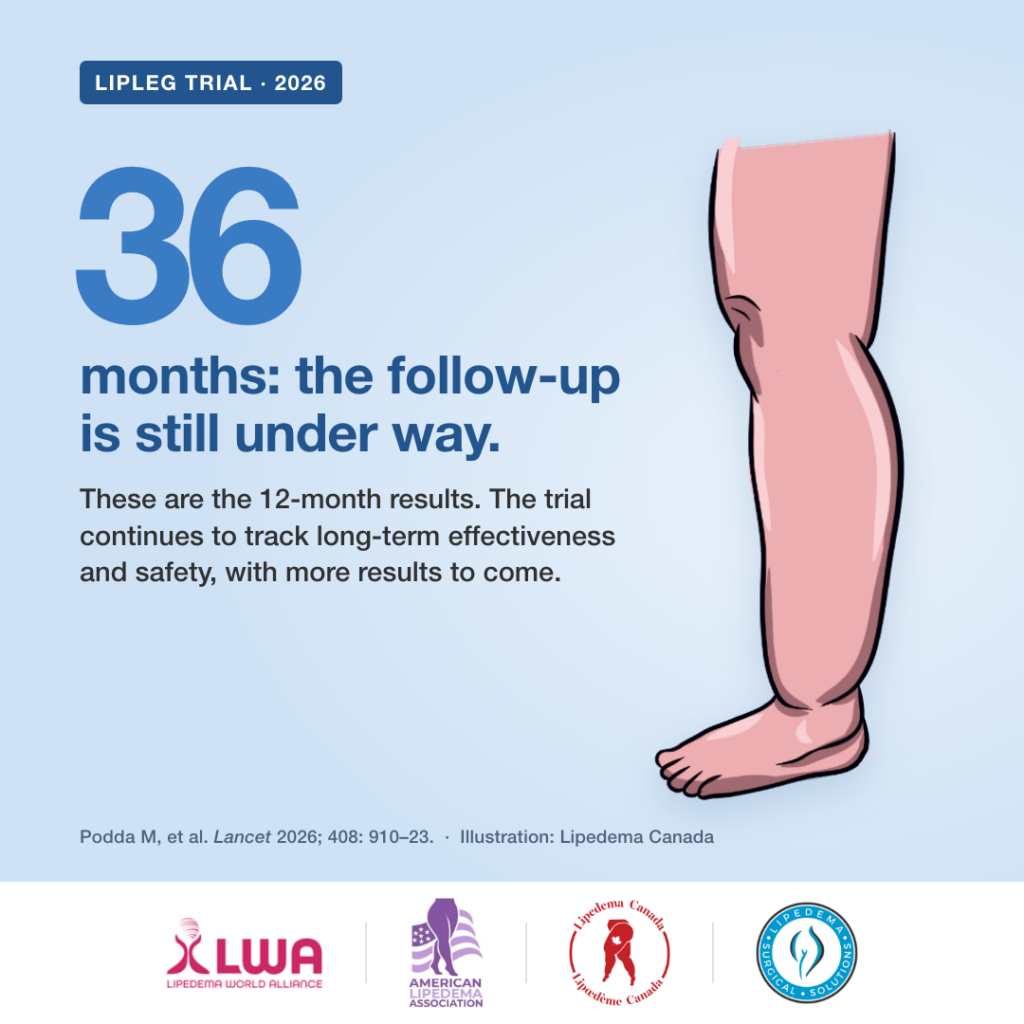
- Follow-up so far is 12 months. A 36-month follow-up is underway, with final patient visits scheduled for August 2026. Those results will show how long the benefits last and whether any patients need additional procedures.
- Surgical techniques varied. Each site used its own standard approach, so the study doesn’t show whether one liposuction technique is better than another.
- Pain is self-reported. There is currently no validated objective test for lipedema pain, so the study relied on patients’ own ratings.
- Perfect blinding isn’t possible. Changes in leg shape after surgery can be visible despite the patches.
- It was conducted in Germany. Results may differ in other health systems and populations.

Germany Now Covers Lipedema Surgery
The LIPLEG findings led directly to a major policy change. In July 2025, the G-BA added liposuction for lipedema to the services covered by German statutory health insurance, for all stages of the disease. Under this pathway, patients start with conservative therapy, and liposuction can be considered if that treatment does not bring adequate symptom relief.
This is the first time a national health system has based coverage of lipedema surgery on randomized trial evidence. It gives patients and physicians in other countries, including the United States, a powerful precedent.
How Dr. Wright’s Approach Compares
The surgical approach used in LIPLEG closely resembles the care patients receive at Dr. Wright’s practice in O’Fallon, Missouri.
In the trial, all surgeons used wet-technique liposuction with tumescent anesthesia. About 82% of patients had power-assisted liposuction and 18% had water-jet assisted liposuction. To keep each session safe, fluid and fat removal were capped per procedure, so most women needed several sessions. Two-thirds had four surgeries, typically completed over about four months.
Dr. Wright’s approach includes:
- Tumescent local anesthesia for patient comfort and safety
- Power-assisted liposuction for precise removal of lipedema tissue
- Staged procedures that limit how much is treated at once. Dr. Wright typically completes treatment of both legs, from hips to ankles, in two to three surgeries.
- Thorough pre- and post-operative care, including medical-grade compression
Dr. Wright is a board-certified physician with more than 25 years of experience and a Diplomate of the American Board of Venous and Lymphatic Medicine. He is affiliated with the National Lymphedema Network and the American Vein and Lymphatic Society, and he has published research on improvements in mobility and knee function after liposuction for lipedema. His most-cited paper, on the standard of care for lipedema in the United States, helped define how lipedema is diagnosed and treated here.
What This Means for You
If you are living with lipedema, the LIPLEG results offer a few important messages:
- Your pain is real. A rigorous, government-funded trial confirmed that lipedema pain is measurable and has a major impact on daily life.
- Conservative care has limits. Compression and lymphatic drainage remain important, but on their own they rarely produced meaningful pain relief in this study.
- Surgery can help at every stage. Women with stage I, II, and III lipedema all benefited.
- The evidence can support your insurance case. While US coverage remains inconsistent, a published randomized trial in The Lancet is the kind of evidence insurers ask for. Our lipedema surgery insurance coverage page and insurance FAQ can help you prepare.
Taking the Next Step
If you have symptoms like unexplained leg pain, swelling that doesn’t respond to diet and exercise, easy bruising, or progressive enlargement of your legs, you deserve an accurate diagnosis and a clear plan. The LIPLEG study shows that effective treatment exists, and you don’t have to navigate it alone.
Schedule a consultation with Dr. Wright to talk through your diagnosis, your treatment options, and whether lipedema reduction surgery is right for you. You can reach our O’Fallon office at 314-449-9065 or through our contact page.
References
- Podda M, Schmidt J, Cornely ME, et al. Liposuction versus conservative therapy for patients with lipoedema in Germany: a multicentre, randomised controlled clinical trial. Lancet 2026; 408: 910–23. ClinicalTrials.gov NCT04272827.
- Podda M, Kovacs M, Hellmich M, et al. A randomised controlled multicentre investigator-blinded clinical trial comparing efficacy and safety of surgery versus complex physical decongestive therapy for lipedema (LIPLEG). Trials 2021; 22: 758.
- Wright T, Babula M, Schwartz J, et al. Lipedema reduction surgery improves pain, mobility, physical function, and quality of life: case series report. Plast Reconstr Surg Glob Open 2023.