

If you’ve been struggling with disproportionate fat accumulation in your legs, hips, or arms that won’t respond to diet or exercise, you may be dealing with lipedema. This chronic condition affects millions of people, predominantly women, yet it’s often misdiagnosed or dismissed as simple obesity.
Understanding the types and stages of lipedema is the first step toward getting the right diagnosis and treatment. At Dr. Thomas Wright’s practice in O’Fallon just outside of St. Louis, Missouri, we specialize in lipedema diagnosis and treatment, helping patients finally understand what’s happening in their bodies and find relief.
What Is Lipedema?
Lipedema is a progressive fat disorder characterized by the symmetrical buildup of subcutaneous fat tissue, typically in the legs and sometimes the arms. Unlike regular weight gain, lipedema fat is resistant to diet and exercise, and the condition often comes with pain, tenderness, bruising, and swelling.
Many people with lipedema spend years feeling frustrated and misunderstood. They’re told to “just eat less and exercise more,” even though their condition has nothing to do with lifestyle choices. Recognizing the different types and stages of lipedema can help you advocate for proper medical care.
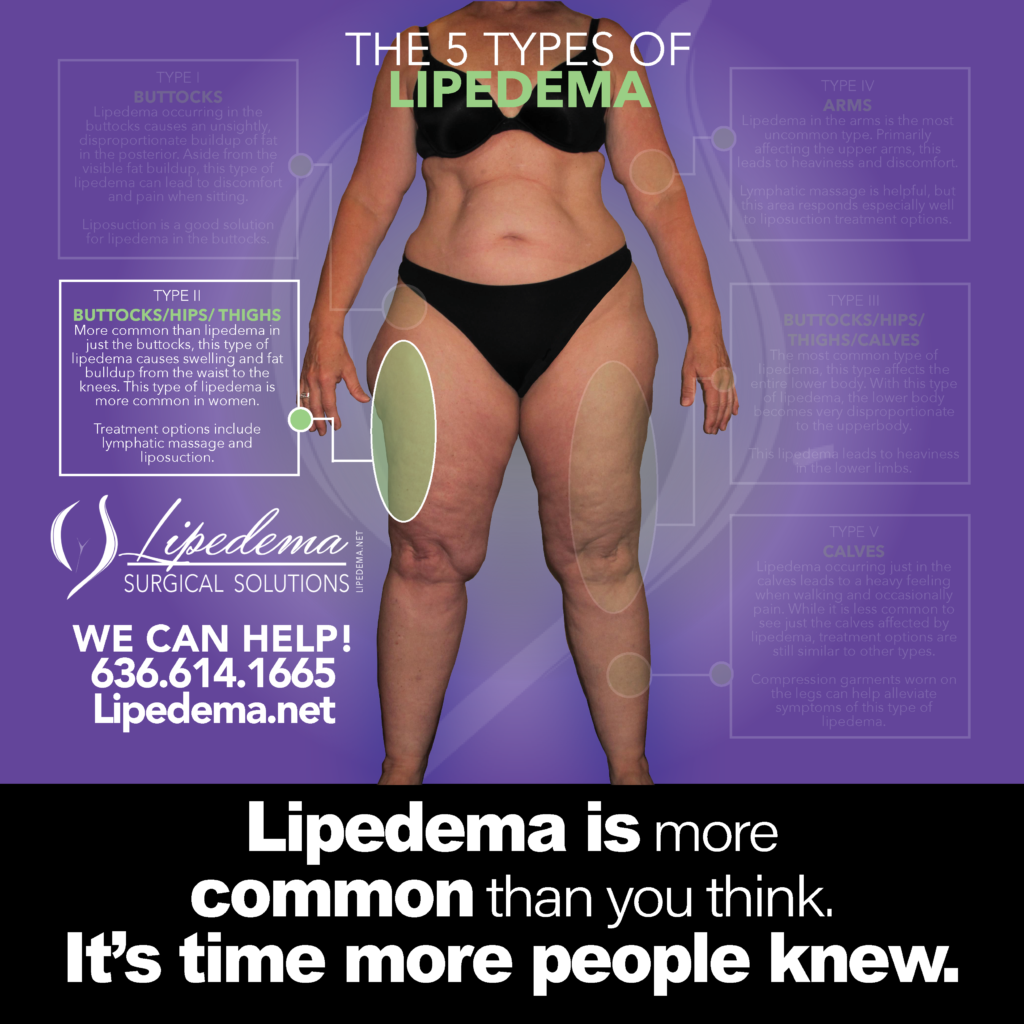
The Five Types of Lipedema
Lipedema presents differently depending on where fat accumulation occurs. Medical professionals classify lipedema into five primary types based on the areas of the body affected.
Type 1: Hips and Buttocks
Type 1 lipedema involves fat deposits around the hips, buttocks, and pelvic region. This type often creates a “pear-shaped” appearance with a noticeable difference between the upper and lower body. The waist may remain relatively small while the hips and thighs are disproportionately larger.
Many patients with Type 1 lipedema notice that clothing fits differently on top versus bottom. Finding pants that fit comfortably can be a constant struggle.
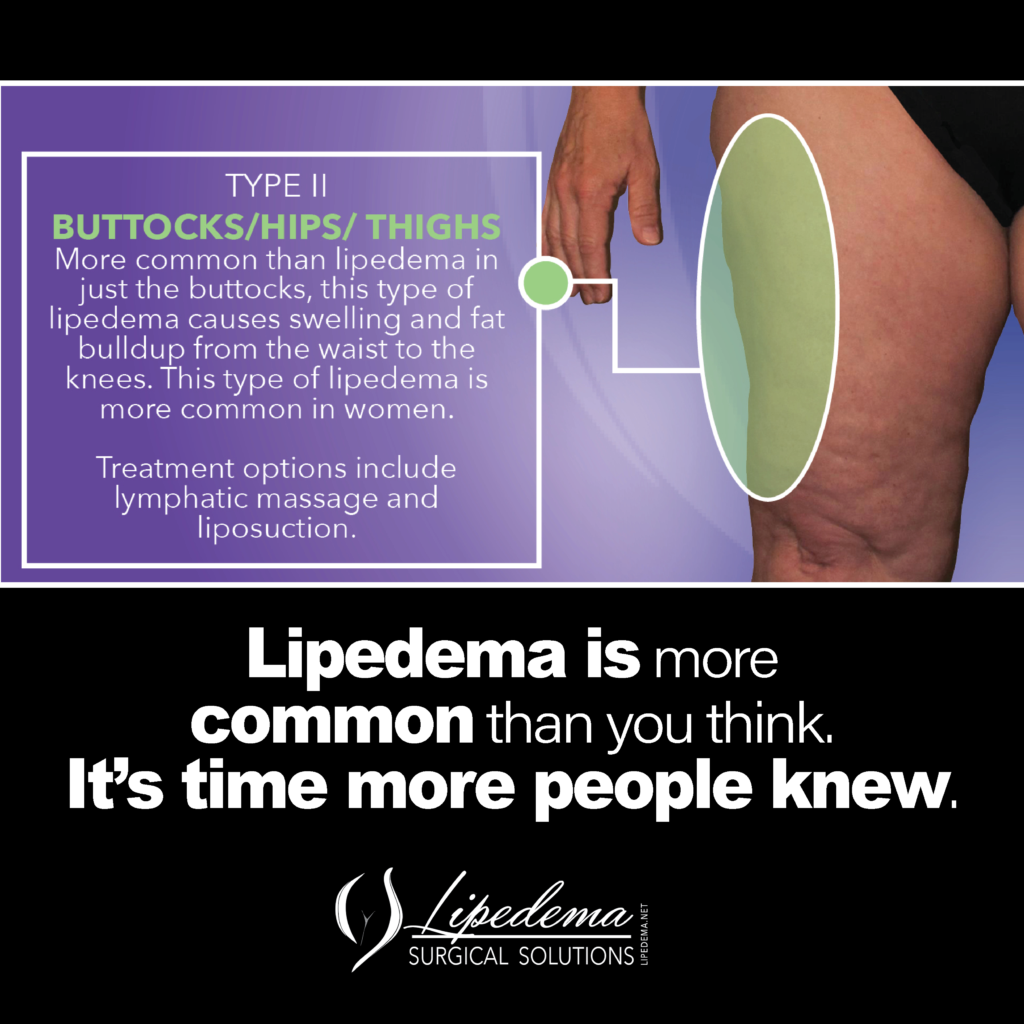
Type 2: Buttocks to Knees
Type 2 lipedema extends from the buttocks down to the knees, creating what’s sometimes called “riding breeches” or “saddlebag” appearance. This type affects the entire thigh area, often with visible fat deposits on the inner and outer thighs.
Walking, exercising, and even sitting for long periods can become uncomfortable as the condition progresses. The affected areas may feel heavy and tender to the touch.
Type 3: Buttocks to Ankles
Type 3 lipedema affects the entire leg from the buttocks all the way down to the ankles. This extensive distribution can significantly impact mobility and quality of life. Despite the fat accumulation extending to the ankles, the feet typically remain unaffected, a key distinguishing feature from lymphedema.
Patients with Type 3 lipedema often experience significant leg heaviness and may develop difficulty with physical activities they once enjoyed. The contrast between swollen legs and normal-sized feet creates a distinct appearance that many find emotionally challenging.
Type 4: Arms
Type 4 lipedema involves the arms, from the shoulders down to the wrists. Like Type 3, the hands are usually spared, creating a cuff-like appearance at the wrists. This type can occur alone or in combination with leg lipedema.
Arm lipedema can affect confidence when wearing short sleeves and may cause discomfort when carrying objects or performing daily tasks. The affected tissue often feels tender and bruises easily.
Type 5: Lower Legs Only
Type 5 lipedema is characterized by fat accumulation from the knees to the ankles, sparing the thighs. This type is less common but can be particularly frustrating because the lower leg swelling may be mistaken for other conditions like venous insufficiency or lymphedema.
Understanding which type of lipedema you have helps Dr. Wright develop a personalized treatment plan that addresses your specific needs and concerns.
The Stages of Lipedema Progression
Beyond the types based on location, lipedema is also classified into stages that describe the severity and progression of the condition. These stages help medical professionals understand how advanced the lipedema has become and what treatment approaches may be most effective.
Stage 1: Early Lipedema
In Stage 1, the skin surface remains smooth, but the underlying tissue has a thickened, spongy texture. You might notice:
- Soft, enlarged fat deposits in affected areas
- Skin that appears relatively normal on the surface
- Mild tenderness or easy bruising
- Some tissue irregularity detectable by touch
At this early stage, many people don’t realize they have lipedema. They may notice that certain areas are larger than expected or that they bruise more easily than others, but these symptoms are often attributed to genetics or weight gain.
Early diagnosis at this stage offers the best opportunity for managing symptoms and slowing progression through conservative treatments and lifestyle modifications.
Stage 2: Moderate Lipedema
Stage 2 lipedema involves more noticeable changes to the skin and underlying tissue:
- Visible irregularities and dimpling on the skin surface
- Development of larger, palpable fat nodules
- Increased pain and tenderness
- More pronounced size disproportion between affected and unaffected areas
- Thickened tissue that creates folds or indentations
By Stage 2, most patients are actively seeking answers about their condition. The physical changes become more visible, and symptoms like pain and swelling often interfere with daily activities.
This is a common stage for lipedema diagnosis, particularly when patients consult specialists who understand the condition. Treatment at this stage can still achieve significant improvement in symptoms and quality of life.
Stage 3: Advanced Lipedema
Stage 3 represents advanced disease with significant tissue changes:
- Large, hardened fat deposits creating substantial deformity
- Pronounced lobules and overhanging folds of tissue
- Significant mobility limitations
- Chronic pain and discomfort
- Increased risk of secondary lymphedema
At this stage, lipedema has progressed to cause substantial physical and emotional challenges. Patients often struggle with mobility, find it difficult to purchase clothing that fits, and may experience depression or anxiety related to their condition.
Surgical intervention through lymph-sparing liposuction techniques becomes an important treatment consideration for Stage 3 lipedema, as conservative management alone may not provide adequate relief.
Stage 4: Lipo-Lymphedema
Stage 4 occurs when lipedema progresses to the point where it triggers secondary lymphedema, a condition where the lymphatic system becomes overwhelmed and can no longer properly drain fluid. This stage is also called lipo-lymphedema and involves:
- Significant swelling that may now include the feet and hands
- Hardened, fibrotic tissue
- Increased risk of skin infections
- Severe mobility impairment
- Substantial impact on quality of life
Stage 4 requires comprehensive treatment addressing both the lipedema and lymphedema components. This typically involves a combination of complete decongestive therapy, compression garments, and potentially surgical intervention.
Why Accurate Staging Matters
Understanding which stage of lipedema you’re experiencing is crucial for several reasons:
Treatment planning: Different stages respond to different treatment approaches. Early-stage lipedema may benefit significantly from conservative management including compression therapy, manual lymphatic drainage, and lifestyle modifications. More advanced stages often require surgical intervention for meaningful improvement.
Realistic expectations: Knowing your stage helps set appropriate expectations for treatment outcomes. While lipedema reduction surgery can provide dramatic relief at any stage, the degree of improvement and recovery process may vary.
Insurance considerations: Proper documentation of lipedema type and stage is often essential for insurance coverage of treatment. Dr. Wright’s office can help you navigate the insurance process and provide the medical documentation needed to support your case.
Monitoring progression: Regular assessment helps track whether the condition is progressing and whether treatment adjustments are needed.
Getting an Accurate Diagnosis in Missouri
If you suspect you have lipedema, getting evaluated by a specialist who understands this condition is essential. Dr. Thomas Wright has extensive experience in lipedema diagnosis and treatment, serving patients throughout Missouri from his O’Fallon and St. Louis locations.
During your consultation, Dr. Wright will:
- Review your medical history and symptoms
- Perform a physical examination
- Assess the type and stage of your lipedema
- Discuss your treatment goals and concerns
- Recommend a personalized treatment plan
Many patients feel an overwhelming sense of relief when they finally receive a lipedema diagnosis. After years of being told to “just lose weight” or having their concerns dismissed, having a doctor who understands what they’re experiencing is validating and empowering.
Treatment Options for All Stages and Types
Treatment for lipedema depends on the type, stage, and your individual goals. Options include:
Conservative Management
- Compression garments to reduce swelling and discomfort
- Manual lymphatic drainage therapy
- Anti-inflammatory nutrition approaches
- Low-impact exercise programs
- Pain management strategies
Surgical Treatment
For patients with moderate to advanced lipedema, lymph-sparing liposuction techniques offer the most effective long-term relief. Dr. Wright specializes in tumescent liposuction techniques:
- Water-Assisted Liposuction (WAL): Uses a gentle spray of tumescent solution to dislodge fat cells while preserving lymphatic vessels
- Power-Assisted Liposuction (PAL): Utilizes specialized cannulas that protect delicate lymphatic structures
These advanced techniques can reduce pain, improve mobility, and restore more proportional body contours while protecting the critical lymphatic system.
Take the Next Step
Living with lipedema can feel isolating, but you don’t have to navigate this journey alone. Understanding the types and stages of lipedema is the first step toward finding relief and reclaiming your quality of life.
Dr. Wright and his team in O’Fallon, Missouri are dedicated to providing compassionate, expert care for lipedema patients throughout Missouri. Whether you’re seeking your first diagnosis or exploring treatment options, we’re here to help.
Ready to learn more about lipedema treatment in Missouri? Contact Dr. Wright’s office today to schedule a consultation. Together, we can develop a treatment plan tailored to your specific type and stage of lipedema, helping you find the relief you deserve.